
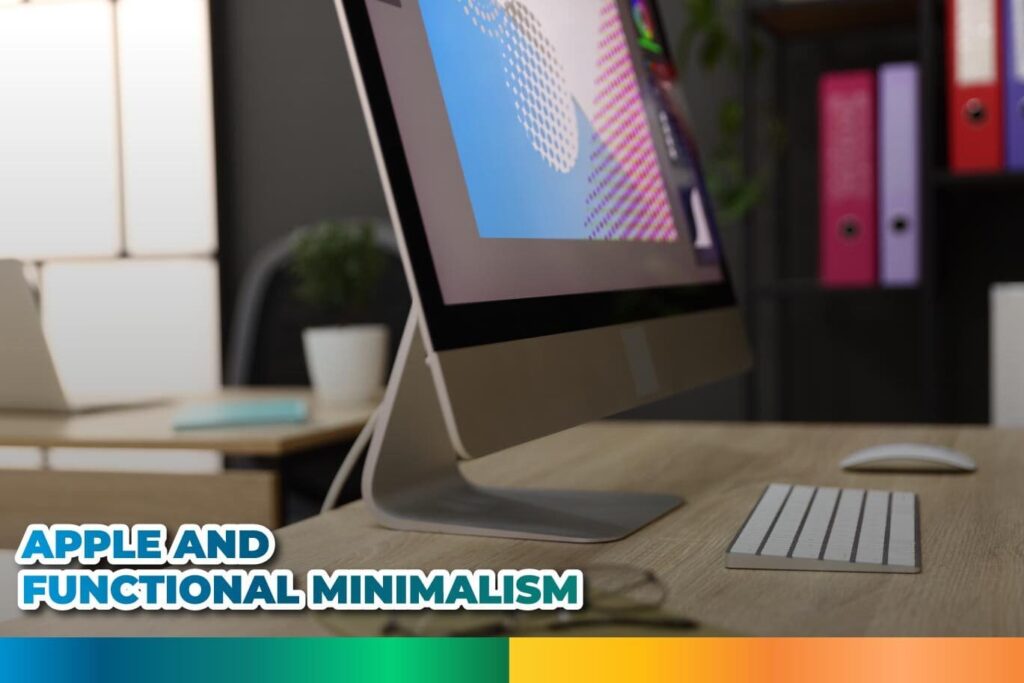

In today’s crowded digital landscape, clarity has become a luxury.
Apple doesn’t just build devices. It has perfected a design philosophy known as functional minimalism. This approach isn’t about creating empty spaces or stripping things away for aesthetic reasons. It’s about removing everything that doesn’t matter so that what does matter becomes impossible to ignore.
From its products and interfaces to its marketing and retail experience, Apple has built an ecosystem where simplicity serves a purpose: making technology feel intuitive, elegant, and human.
1. The Power of White Space
At Apple, graphic design isn’t decoration. It’s communication.
The company’s visual identity draws heavily from Swiss Design principles and rationalist design thinking, both of which emerged from a desire to create more effective and universally understandable communication systems.
Typography as a Design Tool
Apple’s proprietary typeface, San Francisco, was designed for exceptional readability across every device.
Whether you’re reading a notification on an Apple Watch or editing a presentation on a 24-inch iMac, the typography remains clear, consistent, and effortless to consume.
Visual Hierarchy That Guides Attention
Apple uses negative space strategically.
The space between elements isn’t empty. It acts as a visual guide, directing attention exactly where it needs to go: the product, the message, or the action.
Every pixel has a purpose.
Iconography with Meaning
Apple’s icons are more than simple illustrations.
They are universal visual symbols built on strict grid systems that ensure consistency throughout the entire ecosystem. This cohesion reduces friction and helps users instinctively understand how to navigate the experience.
2. Selling an Aspiration, Not a Product
Apple’s branding is often considered the gold standard of consistency.
A simple silhouette of an apple has become synonymous with innovation, creativity, quality, and status.
Radical Consistency
From television commercials and product packaging to retail stores and digital experiences, Apple’s messaging remains remarkably consistent.
This consistency builds trust.
Apple isn’t simply selling a smartphone, laptop, or smartwatch.
It’s selling the experience of owning one.
Translating Technology into Human Benefits
One of Apple’s most powerful marketing strategies is what it chooses not to emphasize.
Instead of focusing on specifications such as RAM, processors, or megapixels, Apple talks about outcomes:
- Capture incredible photos.
- Work from anywhere.
- Stay connected effortlessly.
- Create without limitations.
They transform technical complexity into human experiences.
The Brand of Silence
Apple often presents products against pure white or black backgrounds.
The result is a visual environment where the product becomes the focal point.
There is no unnecessary noise competing for attention.
The design, materials, and craftsmanship do the talking.
3. The Invisible Interface
Apple’s approach to UI and UX design follows a simple principle:
Technology should disappear.
The best interface is often the one users barely notice because it feels natural.
Gestalt Principles in Action
Apple leverages principles such as proximity, similarity, and visual grouping to help users understand interfaces intuitively.
People rarely need instructions because the design itself teaches them how to interact.
Gesture and Haptic Feedback
Functional minimalism is not only visual. It’s physical.
Actions like swiping back, pinching to zoom, or receiving subtle haptic feedback feel like natural extensions of human behavior.
The interface adapts to the user rather than forcing the user to adapt to the interface.
Reducing Cognitive Load
Apple intentionally hides advanced functions behind contextual menus and progressive disclosure.
This keeps primary screens clean and approachable while preserving powerful capabilities for users who need them.
The goal is simple:
Less confusion. More focus.
Why Apple’s Minimalism Works
Apple’s functional minimalism is a reminder that design is often defined by what you choose to remove.
By prioritizing function through a clean, intentional aesthetic, Apple has created a visual and interactive language that resonates with a fundamental human desire: the desire for order.
In a world overflowing with notifications, interfaces, and information, simplicity isn’t just beautiful.
It’s strategic.
And perhaps that’s Apple’s greatest lesson for designers, marketers, and technology companies alike:
Great design isn’t about adding more. It’s about making every element matter.
Building Digital Experiences That Feel Effortless
The best digital products don’t overwhelm users with features. They guide them toward outcomes.
At We Build It, we apply the same philosophy when designing websites, applications, automated workflows, and UX/UI experiences. Our goal isn’t to add complexity. It’s to create digital solutions that feel intuitive, scalable, and aligned with real business objectives.
Whether you’re launching a new platform, redesigning an existing product, or improving customer journeys, great design starts with understanding what truly matters.
If you’re ready to build digital experiences that are simple, purposeful, and designed for growth, let’s talk.